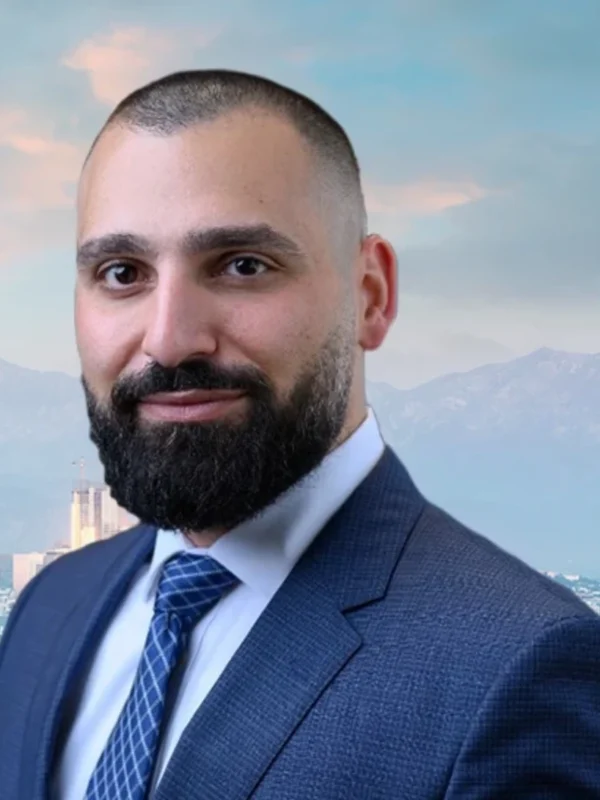
Musician David Anthony Burke, known as D4vd, has been charged with the capital murder of a 14-year-old Lake Elsinore girl whose remains were found in his impounded Tesla. Three special circumstance allegations make the case eligible for the death penalty under California law.
Capital cases require defense work that begins immediately and runs on two parallel tracks — challenging evidence and preparing mitigation. The first weeks after charging can shape the entire case.
What Happened
A 21-year-old musician known professionally as D4vd has been charged with the capital murder of a 14-year-old girl from Lake Elsinore, after her dismembered remains were found in his impounded vehicle in the Hollywood Hills area of Los Angeles. The Los Angeles County District Attorney’s Office filed the charges on April 20, 2026, exactly one year after the victim was last seen alive.
According to prosecutors, David Anthony Burke allegedly engaged in continuous sexual abuse of the victim — identified in court records as Celeste R., 14 — from September 2023 through September 2024. On April 23, 2025, prosecutors say Celeste went to Burke’s home in the Hollywood Hills and was never seen alive again. On September 8, 2025, her decomposed and dismembered body was discovered in two bags inside the front trunk of a Tesla registered to Burke that had been towed to a Los Angeles impound yard after being reported abandoned. According to an unsealed autopsy report, the medical examiner determined she died from two penetrating wounds to her upper body.
Burke was charged in case 26CJCF02399 with one count each of first-degree murder, continuous sexual abuse of a child under the age of 14, and unlawful mutilation of human remains. The criminal complaint also includes three special circumstance allegations: murder of a witness, murder for financial gain, and lying in wait. Prosecutors further allege that Burke personally used a deadly and dangerous weapon — described as a “sharp instrument” — to commit the killing. The combination of these charges and special circumstances makes the case death-penalty eligible under California law.
District Attorney Nathan J. Hochman alleged that Burke killed the victim because she had threatened to expose his sexual conduct, which prosecutors say would have damaged his music career. At his arraignment in Department 30 of the Clara Shortridge Foltz Criminal Justice Center, Burke pleaded not guilty to all charges. He is being held without bail. In a rare procedural move, his defense team — which includes high-profile Los Angeles attorneys Blair Berk and Marilyn Bednarski — exercised the defendant‘s right to a preliminary hearing within 10 court days of arraignment. Superior Court Judge Charlaine F. Olmedo scheduled the four-to-five-day preliminary evidentiary hearing to begin May 1, 2026.
Burke’s attorneys have publicly stated that they intend to vigorously contest the charges. All defendants are presumed innocent unless and until proven guilty in court.
Charges Involved
First-Degree Murder With Special Circumstances — PC 187 and PC 190.2
First-degree murder is a willful, deliberate, and premeditated killing carrying a base term of 25 years to life in state prison. When prosecutors allege one or more special circumstances under PC 190.2, the case becomes capital — meaning the only possible sentences are life without the possibility of parole (LWOP) or the death penalty. In this case, prosecutors have alleged three separate special circumstances:
- Murder of a witness — alleging the victim was killed to prevent her from testifying about a crime
- Murder for financial gain — alleging the killing was committed to protect the defendant’s lucrative music career
- Lying in wait — alleging the defendant waited and watched for an opportunity to attack from a position of advantage
Even one special circumstance is enough to make a case capital. Three substantially expand the prosecution’s theory and the legal strategy required to defend it.
Continuous Sexual Abuse of a Child Under 14 — PC 288.5
This statute applies when a defendant has recurring access to a child under 14 and engages in three or more acts of substantial sexual conduct or lewd acts over a period of at least three months. It carries a sentence of 6, 12, or 16 years in state prison and triggers mandatory lifetime sex offender registration.
Unlawful Mutilation of Human Remains — HS 7052
California law makes it a felony to mutilate, disinter, or remove human remains without lawful authority. The offense carries up to 3 years in state prison. While less serious than the underlying murder charge, this count significantly increases the prosecution’s narrative force at trial.
Death Penalty Eligibility in California
Although Governor Gavin Newsom imposed a moratorium on executions in 2019, the death penalty remains a legally available sentence in California. Prosecutors can — and still do — file capital cases. Defense work in capital cases is among the most resource-intensive in the entire criminal justice system, requiring mitigation specialists, forensic experts, mental-health evaluations, and exhaustive pretrial investigation.
The 10-Day Preliminary Hearing Strategy
California gives every defendant the right to a preliminary hearing within 10 court days of arraignment under PC 859b. Most defendants waive this timeline because the prosecution typically wants more time to prepare. Insisting on the statutory 10 days is rare in a high-profile case, and it forces prosecutors to put their evidence on the record early — which can give the defense crucial information about the strength of the case and witness testimony.
What Defendants and Their Families Should Know
If you or a loved one is facing serious felony charges — particularly homicide, sex crimes, or capital allegations — the most important protection is your right to remain silent. In high-profile investigations, detectives often spend months gathering digital evidence, witness statements, and forensic data before making an arrest. Anything said to investigators, even casually, can become central evidence at trial. Politely decline to answer questions and ask for an attorney before any further contact.
Capital cases are fundamentally different from other criminal cases. The defense team must build two parallel cases: one challenging guilt at the trial phase, and another preparing mitigation evidence for the potential penalty phase. Mitigation work involves investigating a defendant’s life history, mental health, family background, and any factors that bear on whether life without parole or the death penalty is appropriate. This work begins immediately — sometimes years before trial — and requires specialized counsel with capital-case experience.
Families of defendants in capital cases should understand what to expect at the early stages. The defendant will be arraigned, advised of the charges, and ordered held — almost always without bail. The preliminary hearing is where the prosecution must show probable cause that a crime was committed and that the defendant likely committed it. After that comes arraignment on the information, motions to suppress evidence under PC 1538.5, and potentially years of pretrial litigation. Loved ones should also avoid discussing case details on jail phone calls or in visiting rooms — those communications are recorded and regularly used by prosecutors.
In high-profile cases, media attention itself becomes part of the legal landscape. Public statements, social-media activity, and interviews with friends or family can all become evidence or affect jury selection. Coordinated communication and a careful approach to public exposure are part of competent defense strategy. Above all, every defendant remains presumed innocent unless and until the prosecution proves guilt beyond a reasonable doubt — and that presumption applies with the same force whether the defendant is a public figure or a private citizen.
Speak With a Criminal Defense Attorney Now
If you or someone you love is facing serious felony charges — including murder, sex crimes, or capital allegations — in Los Angeles County, the early days after arrest matter most. Attorney Chris Nalchadjian of KN Law Firm, APLC offers a free, confidential consultation and is available 24/7 to review your case and protect your rights. Call (888) 950-0011 to speak with a criminal defense attorney today.
Charged in connection with this case?
Call us immediately for a free, confidential consultation — available 24/7.