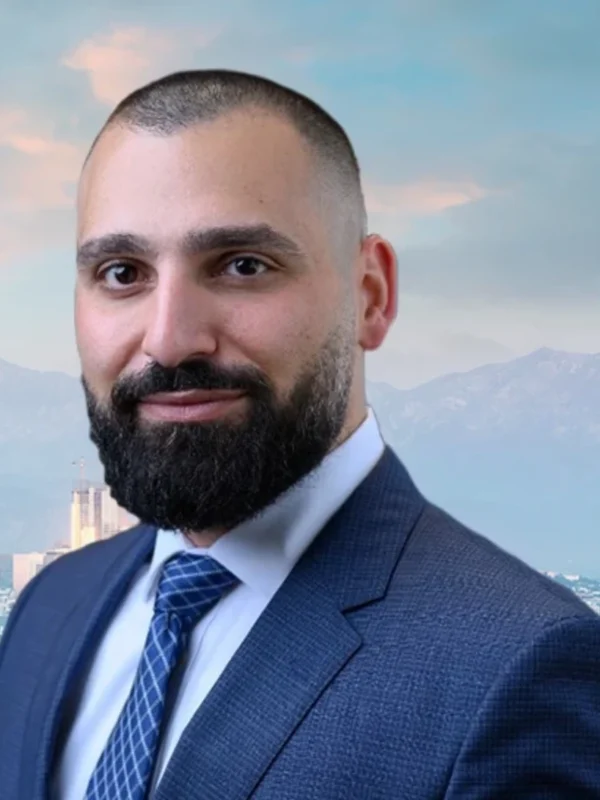
If you are under investigation or have been charged with federal health care fraud in Los Angeles or anywhere in California, the decisions you make now can change the outcome of your case. KN Law Firm, APLC defends physicians, agency owners, billing staff, and other professionals accused of Medicare, Medicaid, hospice, and home health fraud in federal court. As an experienced federal health care fraud attorney, Chris Nalchadjian understands how the government builds these cases — and how to take them apart.
Federal health care fraud cases are not ordinary criminal matters. They are investigated by agencies like the FBI, the Department of Health and Human Services Office of Inspector General (HHS-OIG), and the Medicare Fraud Strike Force, often for months or years before anyone is charged. By the time you learn you are a target, prosecutors may already have your billing records, patient files, financial data, and statements from cooperating witnesses. They arrive with statisticians, data analysts, and a theory of the case already formed. Having a defense attorney involved early — ideally before charges are filed — is one of the most important steps you can take to protect your freedom, your finances, and your professional license.
This page explains the kinds of federal health care fraud cases we handle, the consequences you may be facing, why defenses exist even when the government’s evidence looks overwhelming, and what sets our firm apart. Wherever possible, it links to deeper resources so you can understand the specific statute or strategy that applies to your situation.
Federal Health Care Fraud Cases We Handle
“Health care fraud” is a broad label that covers many different theories of prosecution. The government rarely charges a single, simple offense; instead, it stacks overlapping theories to build the most serious case it can. Our firm defends clients across the full range of federal allegations, including:
- Medicare and Medicaid fraud — false or inflated claims submitted to government health programs, the most common foundation for a federal prosecution.
- Hospice fraud — enrolling patients who are not terminally ill, or certifying and recertifying ineligible patients for the hospice benefit.
- Home health care fraud — billing for visits that were not medically necessary, services not rendered, or patients who were not genuinely homebound.
- Kickbacks and bribery — paying or receiving anything of value for patient referrals, prosecuted under the Anti-Kickback Statute.
- Upcoding and unbundling — billing for more expensive services than were provided, or splitting one service into multiple billable codes.
- Billing for services not rendered — claims for procedures, equipment, tests, or visits that never occurred.
- Medically unnecessary services — providing or billing for care the patient did not need.
- Qui tam and False Claims Act matters — civil and criminal exposure arising from whistleblower lawsuits filed by former employees or competitors.
- Health care fraud conspiracy — allegations that you agreed with others to carry out a fraudulent scheme, which allows the government to reach owners, physicians, billers, and marketers alike.
A single federal indictment often weaves several of these theories together. A typical case might allege billing fraud, kickbacks, false statements, and conspiracy all at once — which is exactly why these matters demand an attorney who understands how the pieces fit and where they can be pulled apart. To learn how the central charge works, see our detailed breakdown of 18 USC 1347 health care fraud and the role of 42 USC 1320a-7b, the Anti-Kickback Statute, in referral-based cases.
The Consequences You Are Facing
Federal health care fraud carries some of the most serious penalties in white collar law. Under the primary statute, 18 USC 1347, a conviction can mean up to 10 years in federal prison for each count — and that exposure rises to 20 years if the offense causes serious bodily injury, or up to life if it results in a patient’s death. Because each fraudulent claim can be charged as a separate count, the theoretical exposure in a billing case can reach far beyond a single ten-year term.
Prison is rarely the only consequence. Sentences in federal court are calculated under the U.S. Sentencing Guidelines, where the single biggest driver is usually the “loss amount” the government attributes to the alleged scheme. Two people charged under the same statute can face very different sentences depending on how that loss figure is calculated — which is why disputing the government’s loss number is often as important as contesting guilt itself.
Beyond incarceration, defendants frequently face court-ordered restitution, asset forfeiture, and steep fines. The financial penalties can multiply quickly: the civil False Claims Act allows the government to recover three times its losses plus a separate penalty for every false claim submitted, and kickback convictions carry their own fines and prison terms. For licensed professionals, the collateral damage can be just as devastating as a sentence. A conviction — and sometimes merely an allegation — can trigger exclusion from Medicare and Medicaid, loss of a professional license, immigration consequences for non-citizens, and the effective end of a career. Because the stakes reach so far beyond the courtroom, no health care fraud charge should be treated as routine. For the precise penalty tiers and what the government must prove, see our reference pages on 18 USC 1347 and the 31 USC 3729 False Claims Act.
Defenses Exist — and They Matter
An investigation is not a conviction, and an indictment is not the end of the story. Federal health care fraud cases turn on intent: the government must prove that you acted “knowingly and willfully” to defraud a health care program. That is a high bar, and it is frequently where these cases break down. Honest billing mistakes, good-faith reliance on professional coders or billing companies, ambiguous and shifting regulations, and genuine disputes over medical necessity are not crimes — yet they are routinely recharacterized as fraud by investigators working backward from a statistical anomaly.
Depending on the facts, a strong defense may challenge the government’s evidence of intent, attack the reliability of the data-mining and statistical sampling used to project “fraud” across thousands of claims, demonstrate that services were medically necessary and properly documented, expose the bias of cooperating witnesses seeking leniency, or move to suppress evidence gathered through constitutional violations. In many cases, the most valuable work happens before charges are ever filed, when an attorney can present exculpatory evidence to prosecutors and argue that the case should not be brought at all.
We explore specific strategies in depth across our blog, including how upcoding and unbundling allegations are defended, how billing for services not rendered cases are actually built, and what really happens during an OIG health care investigation. The right strategy depends entirely on the facts of your case — which is why an early, detailed case review matters so much.
Why Choose KN Law Firm
Federal court is a different arena. The procedures, the sentencing guidelines, the grand jury process, and the sheer resources of the prosecution are unlike anything in state court, and a defense built for state court will not hold up. Attorney Chris Nalchadjian is admitted to practice before the U.S. District Court for the Central District of California, the Ninth Circuit Court of Appeals, and the United States Supreme Court — and he brings that federal experience to every health care fraud case the firm handles.
Clients work directly with their attorney, not a revolving door of associates. We take the time to understand the medical and billing context behind the accusations, because these cases cannot be defended by lawyers who do not grasp how coding, certification, and reimbursement actually work. We retain the right experts — medical, coding, and statistical — and build a defense aimed at the best possible result, whether that means persuading prosecutors to decline charges, negotiating a favorable resolution, or trying the case to a jury.
Consultations are always free and completely confidential, and we serve clients in English and Spanish throughout Los Angeles County, including Glendale, Burbank, Pasadena, Van Nuys, and the city of Los Angeles. If you have received a target letter, grand jury subpoena, or civil investigative demand — or if agents have contacted you or your staff — do not wait and do not try to explain your way out of it alone. Call (888) 950-0011 to schedule a free, confidential consultation.
Frequently Asked Questions
Is health care fraud a federal or state crime?
It can be either, but most significant cases involving Medicare, Medicaid, or TRICARE are charged federally under statutes such as 18 USC 1347. Federal cases are prosecuted in U.S. District Court and carry serious prison exposure, so they require a lawyer who regularly practices in federal court. California also prosecutes state-level health care fraud, which you can read about on our California Medi-Cal and health care fraud defense page.
What is the penalty for federal health care fraud?
Under 18 USC 1347, health care fraud carries up to 10 years in federal prison per count. That rises to 20 years if the offense causes serious bodily injury and up to life if it results in death. Cases also commonly involve restitution, fines, asset forfeiture, and exclusion from federal health programs.
Should I hire a lawyer if I only received a subpoena or audit letter?
Yes. A subpoena, civil investigative demand, or audit is frequently the first visible sign of a federal investigation. What you do before charges are filed can shape the entire case, so it is best to consult a defense attorney right away and avoid speaking with investigators on your own.
What if my billing errors were honest mistakes?
Honest mistakes are not fraud. The government must prove you acted knowingly and willfully to defraud a health program. Demonstrating good faith, reasonable reliance on staff or coders, or a genuine dispute over medical necessity can be central to the defense — but these arguments must be developed carefully and early.
Do you handle cases outside of Glendale?
Yes. We defend federal health care fraud cases throughout Los Angeles County and the Central District of California, including in Burbank, Pasadena, Van Nuys, and the city of Los Angeles. See our city-specific pages, such as our Los Angeles federal health care fraud lawyer page, for local information.
Speak With a Federal Health Care Fraud Attorney Today
A federal health care fraud allegation can threaten everything you have built — but it is defensible, and you do not have to face it alone. KN Law Firm, APLC has the federal court experience to stand between you and the full weight of the government, and the focus to give your case the attention it demands.
Under Federal Health Care Fraud Investigation?
The earlier you act, the more options you have. Speak directly with federal defense attorney Chris Nalchadjian. Free, confidential consultation — available 24/7.